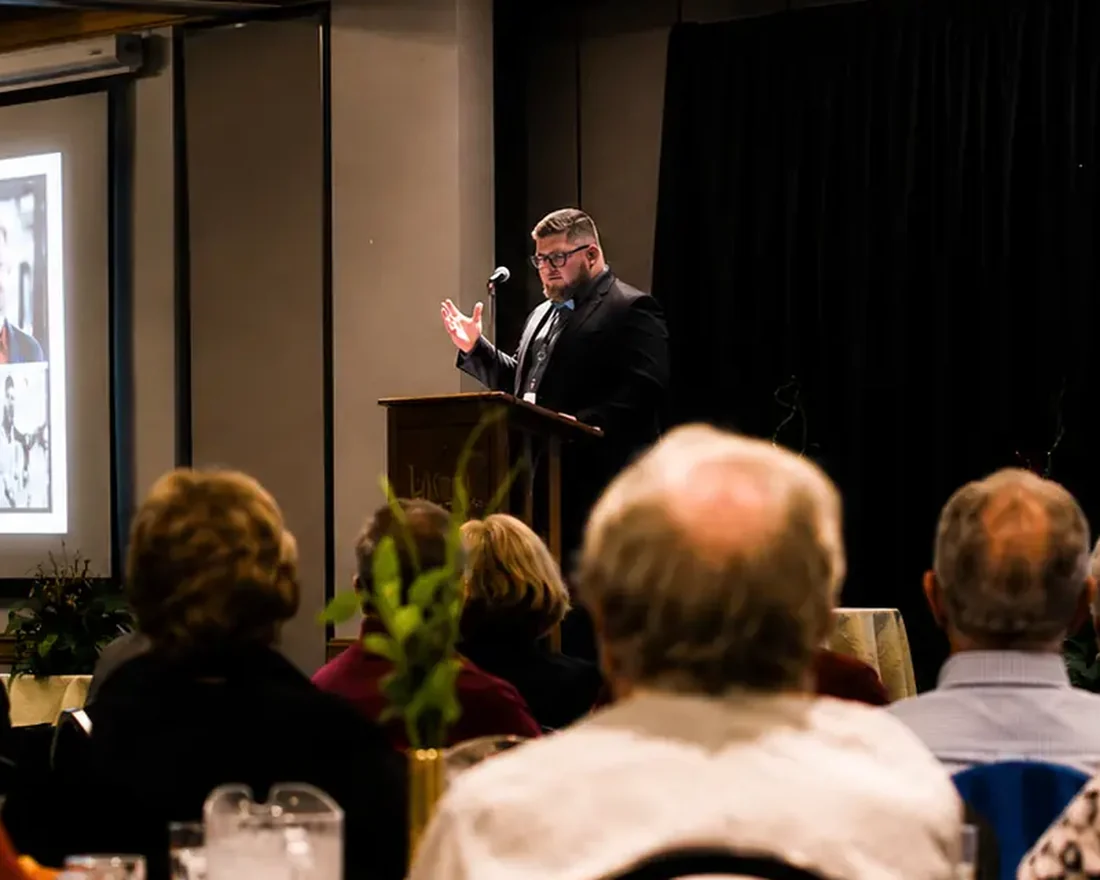
 Speaking
Keynote Audiences Remember
Changing your station, building through uncertainty, leading people, and what it actually costs to create something that works.
Book Luke to speakLuke has never once started with a business idea. He starts with a person.
A cavalry scout goes out ahead of everyone else, finds out what is actually on the ground, and reports back so the rest can move.
Luke did that job in the 82nd Airborne. It turns out to be the only thing he has done since.
Both companies he has built began the same way. One person in front of him had a problem, he went to help with it, and what he found was a system producing that problem on purpose. Then he closed the distance himself.
They are not a framework Luke arrived at and then went looking for problems to use it on. It is what he did twice, written down afterwards.
Not a market, not a segment, not a gap in a landscape slide. One person in front of Luke with a problem he could do something about that week. Both companies he has built start here, and in both cases he was already helping before there was anything to sell.
One person with a problem is bad luck. The same problem standing behind them, over and over, is a system, and it is usually producing that outcome on purpose because somebody is paid by it. That is the point where a favour turns into a company.
A scout does not brief from the map. He goes and finds out what is actually there: who holds the ground already, what they charge, what they are allowed to do, and what the people living with the problem have tried and given up on. It is the slowest step and it is the one most founders skip.
Build the thing that should already exist, and price it the way it should have been priced. Not a better version of what the incumbents sell: the version that would have helped the person in step one.
Luke is not the expert on the problem, and the people who have lived it are. They are usually available, too, because the system in step two had no use for them. Most of the people who built VetClaims are veterans. Clusiv was built with the people it was built for.
The one nobody sells. 185 no’s over about eighteen months on the first company, living on ramen. No outside capital at all on the second. There is no version of this sequence that costs less than everything, which is why the other five steps are the easy part.
The sixth step is the one nobody sells, and it is the one that decides the outcome.
Neither of them was an idea Luke had. Both of them were somebody he met.
The world’s first e-learning platform for blind users.
The person. Ken, a blind mentor Luke was working alongside on an accessibility problem, who said that for the first time in his life he felt intellectually valued, and that it probably would not happen again.
The system. Every job worth having runs on two or three pieces of software, and none of them were built to be used without sight. An entire workforce locked out by interface rather than ability.
What it cost. 185 no’s before the first yes, Techstars, and a round closed near a million dollars. A federal funding cut ended it in December 2023: a budget line, not the product.
The company Luke runs now.
The person. Luke himself, eleven years earlier: a veteran with benefits he had earned, no idea how to reach them, and no one to ask. He found out they existed at a food pantry.
The system. An industry that had grown up around that gap and charged for it, taking a permanent percentage of a disability check for the life of the claim.
What it cost. Everything Luke had, again, from a note card in February 2024. Flat rate, published up front. 438 people on the payroll inside 22 months, most of them veterans, and no outside capital.
You can do whatever you want. All it costs is everything you have.
Every CEO says they want a team that moves without being told. Almost none of them can hand over the wheel and keep the company intact. Here is how Luke does it at 438 people.
People get room to solve problems their own way. Trust, ownership and accountability are the operating condition, not a poster.
You can work on anything until it can cost the company reputation or damage the mission. Past that point it isn’t yours to decide, and it isn’t Luke’s either. He is the sole owner of the company and he holds himself to the same rule.
It doesn’t mean thinking about the customer all day. It means the first question on any lever is what pulling it does to their experience. Luke has taken the smaller number more than once because the experience got ten times better.
Twist a word to a veteran and you’re gone. Not a performance plan. Gone. Autonomy only works if the floor underneath it is absolute.
Different subjects. Same operating philosophy.
An experience can technically meet accessibility requirements and still be miserable to use. The leadership principle runs well past accessibility: passing the test doesn’t mean you have solved the problem.
Accessibility.com panelLuke has challenged organizations to stop treating accessibility purely as a social obligation. On the Accessibility.com panel he argued that millions of blind consumers are an underserved market, and that inaccessible products leave that money on the table.
Accessibility.com panelClusiv’s product development involved blind and visually impaired people directly in creating and documenting the user experience. MIT Solve described the result as a first-of-its-kind experience explicitly designed around blind and visually impaired users.
MIT SolveLuke’s public leadership philosophy is teams that can act rather than teams that wait for the founder. His Veteran Social Summit profile puts the same four words around it: autonomy, trust, ownership, accountability.
Veteran Social Summit profileWhether it’s a stage, a conversation, or a problem you’re trying to solve, Luke is interested in the places where experience matters more than another playbook.
SpeakingChanging your station, building through uncertainty, leading people, and what it actually costs to create something that works.
Book Luke to speak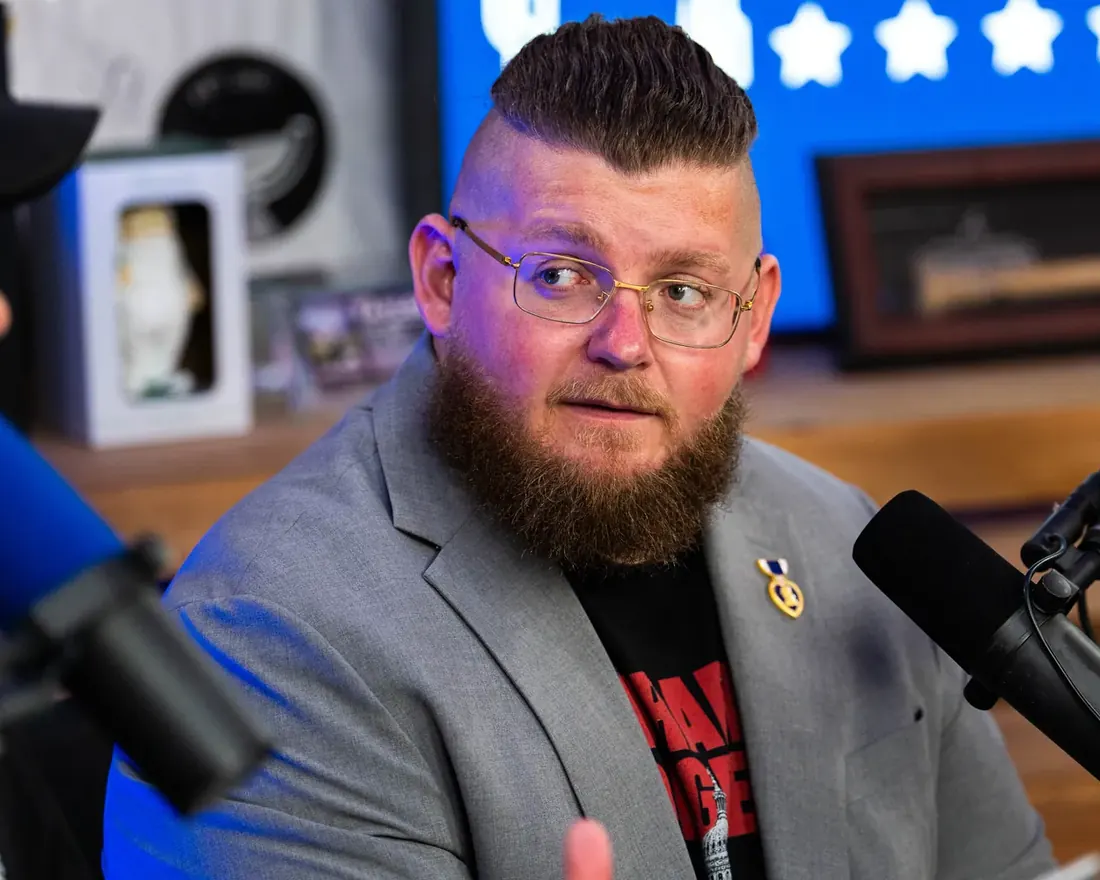 Media
MediaPodcasts, interviews and real conversations. Give Luke the questions your audience actually cares about, not a script.
Have Luke on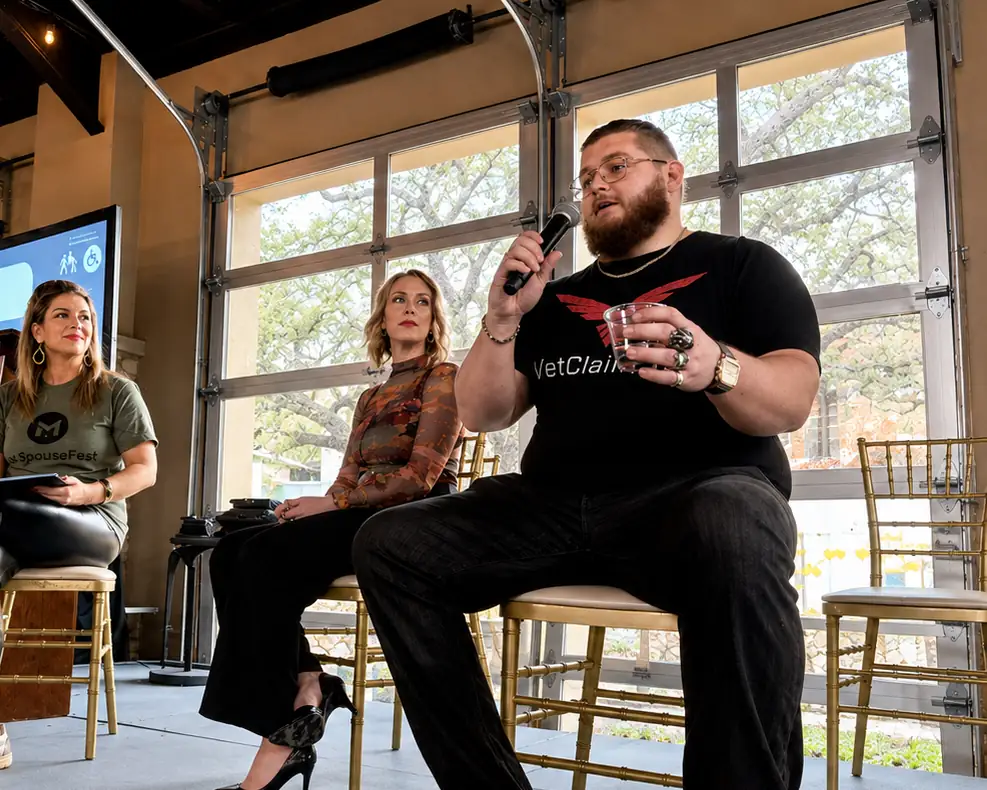 Consulting
For founders, leaders and companies working through growth, change, or a problem that doesn’t have an obvious playbook.
Bring Luke in Collaborations
Building something you think Luke should know about? Tell him what it is and why you think he belongs in it.
Start a conversation